
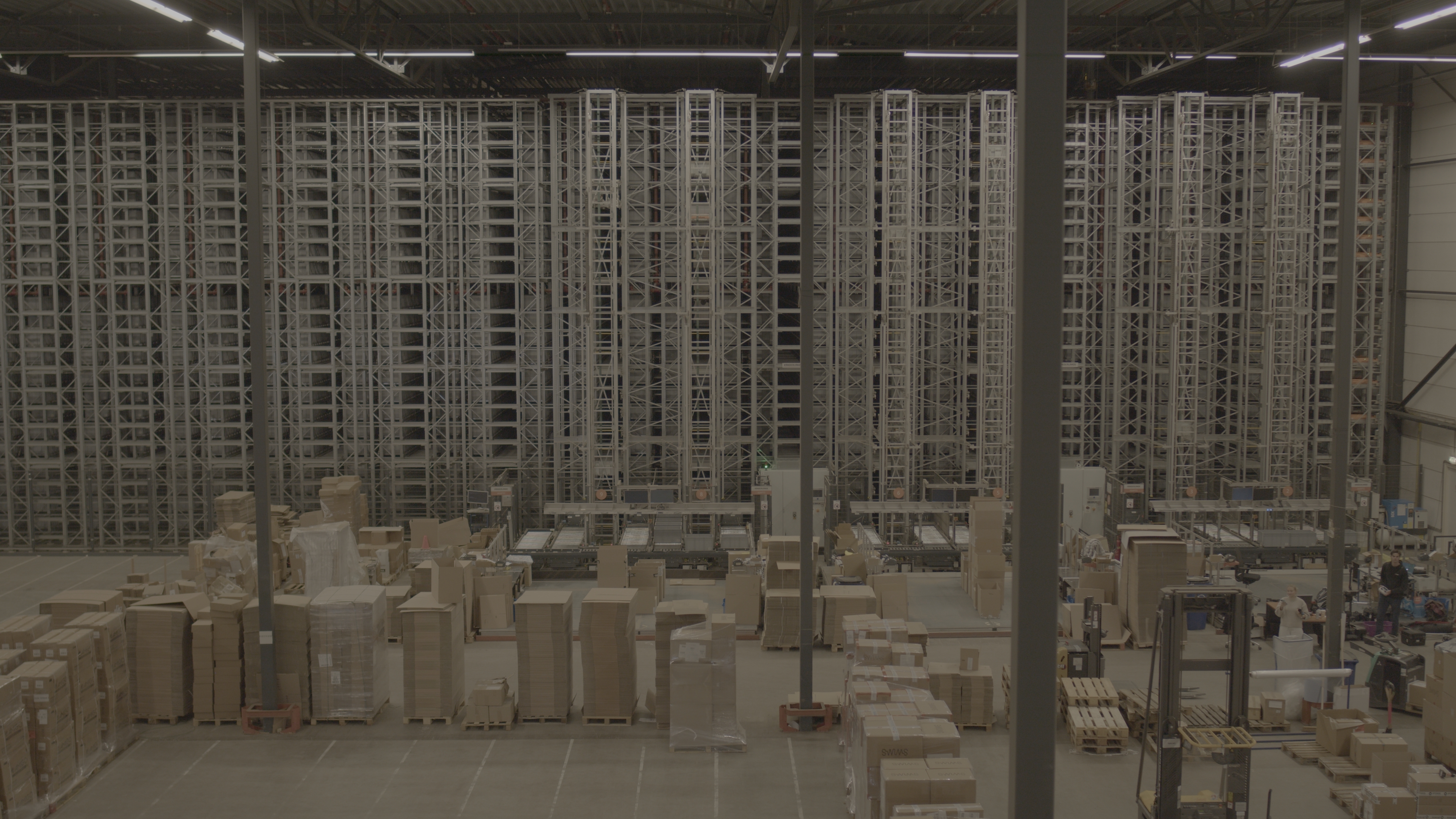
Traditional 3PL automation is broken
Traditional warehouse automation does not work for 3PLs. Here is why. And here is how end-to-end AI robots fix the problem.
The automation promise fell short
Third-party logistics providers (3PLs) are changing operations constantly. Customer demands shift weekly. Product catalogs grow. Packaging formats change. Order profiles fluctuate daily.
Most warehouses still run automation designed for static operations.
For years, automation vendors promised efficiency and scale. Conveyor belts, fixed robotic cells, and custom picking systems were sold as long-term investments. Many 3PLs learned a hard lesson. What they installed as modern technology became rigid, outdated infrastructure before they had paid themselves back.
This article covers:
- Why traditional automation does not fit the 3PL business model
- The hidden costs of custom-coded systems
- What happens when your customers change their requirements
- How AI warehouse robots (humanoids) give 3PLs the flexibility they need
The core problem: traditional automation was built for factories
Traditional warehouse automation needs stable product dimensions, predictable order flows, minimal process changes, and long planning horizons. This describes manufacturing lines. Not 3PL warehouses.
You serve multiple customers at once. Each one has different SKUs, packaging rules, order cut-off times, and seasonal peaks. When you onboard a new customer, or an existing one changes box sizes, labeling rules, or order composition, traditional automation breaks down.
Pain point 1: slow and disruptive implementations
First, you’ll get months of engineering before you see value. When you invest in traditional automation, implementation takes time:
- Engineers and consultants arrive on-site
- Your warehouse layout freezes for months
- Operations get disrupted during installation
- Go-live timelines stretch six months, or often longer
During this time, productivity drops. Your workers adapt to half-finished systems, temporary workflows, and ongoing testing.
This delay hurts your service levels and customer satisfaction.
Pain point 2: high upfront costs and risk
You bet millions on an uncertain future. Traditional automation projects require:
- Capital investments from €1M to tens of millions
- Custom mechanical equipment
- Custom software development
- Long depreciation cycles
The real problem is commitment. Once installed, these systems lock your warehouse into one way of working. If your business changes, the automation does not adapt. Your warehouse works around the automation. Or you replace the whole system.
Pain point 3: custom code creates fragile systems
Your warehouse becomes a one-off. Traditional automation relies on custom code:
- Logic tailored to one warehouse layout
- Rules written for specific products and boxes
- Exceptions handled through one-off scripts
This creates fragile systems. Small changes cause big problems.
A simple customer request, like a new product size or different packaging, requires:
- Software rewrites
- Mechanical reconfiguration
- New testing cycles
- Consultants returning on-site
A routine operational change becomes a costly project.
Serve customers with confidence.
No more surprises.
Gain more control over your operations with predictable and reliable robots. Smooth sailing.
Flexibility beats peak throughput
Many automation projects optimize for maximum throughput under ideal conditions. For 3PLs, adaptability matters more than raw speed.
A system that:
- Learns new tasks in hours
- Handles new products without re-engineering
- Adjusts workflows without downtime
beats a rigid system optimized for yesterday’s requirements.
The solution: humanoid warehouse robots
AI and robotics now deliver what 3PLs need. Advances in AI, robotics, and vision systems created a new category. Humanoid warehouse robots work as general-purpose warehouse workers powered by AI.
They do not perform one narrow task. They adapt to your needs.
Advantage 1: learn new tasks in a day
Traditional automation requires months of programming. Humanoid robots observe tasks, learn through demonstration, and adapt behavior using AI models. A new picking method or packaging process takes one day to learn. Not months.
Advantage 2: built for change
Humanoid robots operate in:
- Your existing warehouse layout
- Human-centric environments
- Mixed operations alongside your people
You do not rebuild your warehouse around the robots. When workflows change, robots adapt. No conveyors to remove. No codebase to rewrite.
Advantage 3: reliable 24/7 operations
Humanoid robots deliver consistent performance, around-the-clock availability, and less dependency on temporary labor. You get higher productivity and faster ROI without locking into rigid infrastructure.
What humanoid robots handle
Humanoid warehouse robots work across your operation:
- Order picking
- Inbound sorting
- Packaging
- Returns processing
- Order control and verification
A unified AI system understands tasks, vision, and robot state. All in one.
Why this matters for 3PLs
For 3PLs, flexibility is the business model. Humanoid robots:
- Scale up or down with your demand
- Support customer churn without re-engineering
- Enable faster client onboarding
- Protect your margins in a volatile market
Your automation improves continuously. Your automation never becomes obsolete.
FAQs: humanoid warehouse robots for 3PLs
Traditional automation is built for static operations. 3PLs need constant adaptation to changing customers and products.
Weeks, not months. New tasks take as little as one day to learn.
No. They operate in existing environments designed for humans.
Yes. They deliver continuous, consistent performance.
Robots adapt through retraining. No mechanical or software re-engineering needed.
Yes. Faster deployment, higher flexibility, and 24/7 operation drive quicker returns.
The future of 3PL automation
Traditional warehouse automation was built for a world of stability. 3PLs do not operate in stability.
Humanoid warehouse robots give you automation that evolves as fast as your customers do. They turn automation from a risky capital bet into a flexible operational advantage.
For 3PLs, this is the right automation.